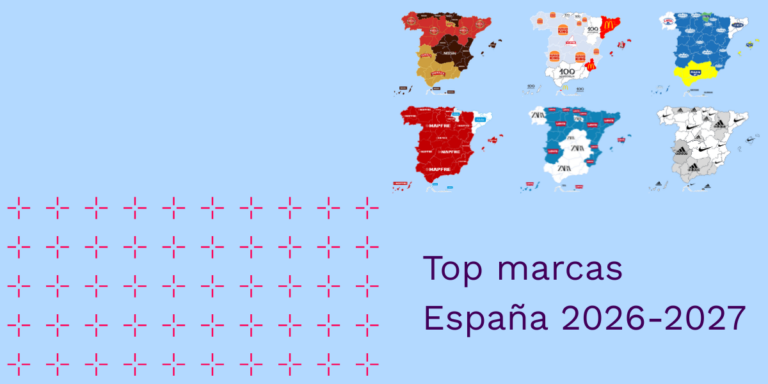
The portrait of consumption in Spain evolves every year, reflecting how Spanish consumers’ preferences are changing. This study analyses Spain’s favourite brands for 2026–2027, presenting a positioning map by autonomous community across key sectors such as food, fashion and technology.
Through these rankings, based on surveys (*) on brand preference, you can discover consumers’ genuine brand loyalty and identify the trends that will shape the market in the years ahead. An approach that measures direct emotional connection, revealing how, in some cases, the brand consumers want is not necessarily the one with the highest sales volume, market share or physical presence.
Favourite Spanish brands by category
| Category | Brand | Percentage of votes |
|---|---|---|
| Beer | Estrella Galicia | 42,5% |
| Bakery | Donuts | 37,2% |
| Furniture and home decor | Ikea | 35,8% |
| Supermarket | Mercadona | 35,2% |
| Milk | Central Lechera Asturiana | 32% |
| Sportswear | Adidas | 30,3% |
| Telecommunications | Movistar | 25,2% |
| Technology | Samsung | 25,1% |
| Fashion | Zara | 24,4% |
| Health insurance | Mapfre | 24,3% |
| Coffee | Nescafé | 21,6% |
| Fast food | Burger King | 17,8% |
1. Map of Spain’s favourite beer brands

Top 3 beer brands in Spain
- Estrella Galicia: 42,5%
- Mahou: 14,7%
- Cruzcampo: 9,8%
The beer sector in Spain continues to undergo major transformation, characterised by more moderate consumption volumes and growing interest in more disruptive and sophisticated varieties.
In this edition, Estrella Galicia consolidates its national dominance, reaching 42.5% of the votes. The Galician brand expands its sphere of influence by adding a new key territory: the Canary Islands, where it leads with 37.4% of preferences, ahead of Dorada (33.4%), the archipelago’s traditional brand.
Meanwhile, Mahou completes the national podium, once again taking second place with 14.7% of brand preference, supported by its strong position in central Spain. In third place, Cruzcampo strengthens its position with 9.8%, closely followed by Cervezas Alhambra (9.1%), which maintains a strong presence across the peninsula thanks to its sensory positioning and deep roots in the hospitality sector.
The phenomenon of “beer patriotism” continues to be the main shield protecting local brands in their home territories:
- Galicia: Estrella Galicia records an almost absolute dominance, reaching 92.5% of selections.
- Aragon: Ambar firmly defends its stronghold with 76.2% of support.
- Region of Murcia: Estrella de Levante secures the lead in its home territory, reaching 51.0% of votes.
- Community of Madrid: Mahou maintains its historic dominance with 49.3% of preferences.
- Catalonia: Estrella Damm leads the region with 44.5%.
- Andalusia: Cruzcampo retains its throne in the south, emerging as the favourite with 38.1% of support.
2. Map of Spain’s favourite technology brands

Top 3 technology brands in Spain
- Samsung: 25,1%
- Apple: 20,7%
- Xiaomi: 15,9%
The race for technology brand loyalty in Spain sees Samsung consolidate its position at the top of the national podium with 25.1% of the votes. The South Korean company leverages the breadth of its product range, spanning from entry-level devices to foldable flagships and integrated AI, to expand its geographical reach by gaining one net territory compared with the previous edition and increasing its national share by 1.0 percentage point. Its territorial dominance extends across 13 autonomous communities, with particularly strong results in the Canary Islands (39.6%), Asturias (28.8%), the Valencian Community (27.9%), the Basque Country (27.8%) and Murcia (26.8%).
Meanwhile, Apple secures a solid silver medal, capturing 20.7% of overall brand preference. Despite losing 5 net territories compared with the previous year at regional level, the US multinational strengthens the loyalty of its core users, gaining 3.2 percentage points in national preference. The Apple brand demonstrates the strength of its premium ecosystem by leading in key markets and highly urbanised areas, topping the rankings in the Community of Madrid (26.7%), Navarre (24.5%), Cantabria (21.6%) and Extremadura (21.7%).
The third step on the podium goes to Asia’s Xiaomi, with 15.9% of preferences, consolidating its position as the preferred alternative for consumers who prioritise value for money and access to high-end features. The brand maintains a highly consistent presence across the peninsula and tops the rankings in Ceuta and Melilla.
3. Map of Spain’s favourite fast-food brands

Top 3 fast-food brands in Spain
- Burger King: 17,8%
- 100 Montaditos: 17,4%
- McDonald's: 17,3%
Spain’s fast-food sector is reorganising around a hyper-connected consumer, with chains competing through app-based offers, the speed of digital ordering terminals and their connection with shared leisure activities. Against a backdrop of rising prices in traditional hospitality, 100 Montaditos is making a spectacular comeback by positioning itself as the low-cost alternative to the neighbourhood bar, shaking up the foundations of the category.
This phenomenon breaks up the historic burger duopoly: while Burger King and McDonald’s accounted for more than 51% of national brand preference in the previous edition, their combined share has now fallen to 35.1% — a loss of more than 16 points. The national ranking is extremely close, led by Burger King (17.8%), which rises to first place, followed by the surge of 100 Montaditos into second place (17.4%) and McDonald’s in third (17.3%).
The regional map completes this picture with two notable territorial exceptions driven by differentiated formats. In the Community of Madrid, VIPS takes first place with 24.6% of preferences thanks to its urban café-restaurant model, while KFC springs a surprise in the Balearic Islands, taking the lead with a resounding 44.4% of support, driven by the habits of the island population and the tourist market.
4. Map of Spain’s favourite milk brands

Top 3 milk brands in Spain
- Central Lechera Asturiana: 32%
- Hacendado: 19,9%
- Puleva: 13,8%
Spain’s dairy sector continues to undergo significant restructuring, driven by margin pressure at farm level and changing consumer habits, with consumers reducing their consumption of traditional milk in favour of plant-based drinks, enriched options and lactose-free formulas. Against this market backdrop, Central Lechera Asturiana regains first place on the national podium, reaching 32% of votes and establishing broad dominance across mainland Spain, with particularly strong results in the Community of Madrid (31.8%), Castile and León (46.1%) and its home territory of Asturias (82.8%).
In second place comes private-label brand Hacendado (19.9%), which, despite losing ground across the peninsula, leads in the autonomous cities of Ceuta and Melilla, while Puleva (13.8%) consolidates third place, strengthening its historic dominance in Andalusia (38.6%) and taking the lead in the Balearic Islands (28.6%).
The distinctive feature of this market once again comes from the strong roots of local brands in their home communities: Larsa remains unbeatable in Galicia with 39.9% of support, Kaiku secures first place in the Basque Country with 32.1%, and Lletnostra takes the win in Catalonia with 24.7% of selections.
5. Map of Spain’s favourite coffee brands

Top 3 coffee brands in Spain
- Nescafé: 21,6%
- Marcilla: 19,3%
- Nespresso: 12,4%
Coffee is no longer chosen solely out of habit or based on price. Interest in origin, fair-trade certifications and a preference for whole-bean coffee or compostable capsules now influence household purchasing decisions.
Indeed, capsule coffee already accounts for around 45% of the value of household coffee sales in Spain, forcing traditional brands to innovate in terms of formats without losing their emotional connection with consumers.
- Nescafé reaffirms its national leadership: With 21.6% of the votes, the Nestlé brand remains at the top of the national podium as Spaniards’ preferred brand, securing first place across the vast majority of mainland Spain and northern Spain, with peaks in Castile-La Mancha (34.2%) and Cantabria (33.6%).
- Marcilla strengthens its second-place position: The brand achieves 19.3% of brand preference in Spain, establishing a strong presence in the north-eastern quadrant of the peninsula by clearly leading in Navarre (30.8%), Aragon (26.1%) and the Balearic Islands (23.7%).
- The Nespresso phenomenon reaches the national podium: Although it fails to take the lead in any territory, Nespresso rises to third place nationally with 12.4% of the votes. Its proposition, built around sophistication and customer experience, demonstrates broad appeal among Spanish households.
- A narrow victory in Catalonia: In the Catalan market, Marcilla (21.9%) takes first place after an extremely close vote-by-vote contest, keeping the heritage of traditional roasting alive in the face of pressure from multinational brands.
6. Map of Spain’s favourite bakery brands

Top 3 bakery brands in Spain
- Donuts: 37,2%
- Pantera Rosa: 14,6%
- Phoskitos: 13,3%
Spain’s industrial bakery and confectionery sector generates more than €1 billion a year through the food retail channel, in a market where 82% of households regularly consume bakery products or biscuits.
Against this backdrop, Donuts emerges as the undisputed queen of Spain’s industrial bakery market, capturing 37.2% of the country’s valid votes. The iconic Bimbo brand exercises an almost absolute monopoly on the map, emerging as the preferred choice in all mainland autonomous communities and both archipelagos (the Canary Islands and the Balearic Islands). Its strongest shares are recorded in the Basque Country (44.3%), Canary Islands (44.1%), Extremadura (41.9%), Community of Madrid (40.5%) and Castile and León (39.5%).
The national ranking pays tribute to the great icons of childhood. Pantera Rosa (14.6%) secures the silver medal, supported by its strong roots in La Rioja (22.1%), Navarre (22.2%), Asturias (21.6%) and Aragon (20.0%). Phoskitos (13.3%) takes third place on the podium, particularly popular in Andalusia (17.5%), Galicia (15.9%) and the Valencian Community (15.0%). The national ranking is completed by Oreo biscuits (11.7%), KitKat chocolate bars (11.2%) and the classic Bollycao (10.7%).
7. Map of Spain’s favourite supermarket brands

Top 3 supermarket brands in Spain
- Mercadona: 35,2%
- Lidl: 20%
- Carrefour: 15,7%
Families now visit an average of 3 or 4 different chains to complete their shopping basket. Could this constant shift be taking its toll on Mercadona? The Valencian brand has seen its preference decline by 3.6 points (from 38.8% to 35.2%) compared with the previous year. Nevertheless:
- Mercadona retains first place nationally with 35.2% of preferences: Although it is losing ground in the north, it dominates in the vast majority of autonomous communities, approaching or exceeding 40% of support in key markets such as the Canary Islands (46.6%), Murcia (45.2%), Extremadura (42.1%), the Valencian Community (39.3%), the Community of Madrid (39.2%) and Andalusia (37.3%).
- Lidl strengthens its second-place position nationally: The German chain consolidates its silver medal with 20% of the votes. Its successful strategy of fresh products and international themed weeks makes it Mercadona’s main challenger across almost all mainland and island territories, with its strongest result in the Canary Islands (36.1%).
- Carrefour remains in third place: The French retail giant holds third place nationally with 15.7% of the votes, driven by the versatility of its different formats and coming close to victory in Cantabria (26.7%) in a tight contest with Mercadona.
- Eroski protects its northern stronghold: The Basque cooperative delivers the map’s main distinctive result by consolidating its lead in the Basque Country (29.6%) and Navarre (33.3%), while also maintaining a strong position in Galicia (20%) through its alliance with Vegalsa-Eroski.
8. Map of Spain’s favourite fashion brands

Top 3 fashion brands in Spain
- Zara: 24,4%
- Levi's: 22,5%
- Ralph Lauren: 10,7%
Following the impact of inflation on raw materials and transport, the fashion industry is facing major structural challenges: the sustainability requirements imposed by the new European textile waste regulations, the massive arrival of ultra-fast fashion platforms, whose web traffic in Spain has grown by more than 30% over the past year, and the rise of second-hand shopping (reCommerce).
Against this backdrop, the preference map reveals an extremely high concentration of brands: just three names (Zara, Levi’s and Ralph Lauren) account for 57.6% of Spanish consumers’ total brand loyalty, caught between constant rotation and the value of iconic brands.
- Zara retains the national crown despite losing territories: With 24.4% of the votes, the flagship brand of the Inditex Group remains the favourite fashion brand. Although its territorial dominance is concentrated in four mainland regions, its resounding victory in its home territory of Galicia (41.1%), combined with strategic wins in the Community of Madrid (23.1%), Andalusia (24.8%) and Castile-La Mancha (22.2%), gives it the volume needed to secure first place nationally.
- Levi's records a sweeping victory on the regional map: The iconic American denim brand retains second place nationally with 22.5% of support, but achieves the strongest territorial dominance, leading in 13 autonomous communities (7 more territories than in the previous edition). Levi's has become the go-to choice for timeless quality, covering almost the entire mainland and island map, with its highest result in Cantabria (31.3%).
- Ralph Lauren completes the podium: The North American premium fashion brand consolidates third place nationally with 10.7% of the votes, reflecting the opportunity represented by aspirational fashion and the quiet luxury concept among urban consumers.
- The retail and fast-fashion pack: The national ranking is completed by major commercial brands such as H&M (7.8%) and Spanish brand Mango (7.2%), which continues to strengthen its international growth and appeal among adult consumers. Meanwhile, value-fashion multinational Primark (6.4%) and youth brand Bershka (4.9%) secure prominent positions in the accessible price segment.
- Shein’s contained rise in consumers’ minds: Although Asian platform Shein (3.7%) continues to gain market share in terms of volume and online traffic, its direct brand loyalty index remains well below that of traditional physical retail giants. This highlights the major challenge facing digital-only brands in building a lasting emotional connection compared with the tangible value of the physical store.
9. Map of Spain’s favourite sportswear brands

Top 3 sportswear brands in Spain
- Adidas: 30,3%
- Nike: 30,1%
- The North Face: 8,3%
Spain’s sportswear and footwear market is going through a mature phase in which multinationals are navigating competition from the low-cost segment and slowing footfall in physical stores. Against this backdrop, Adidas takes the national lead for the first time with 30.3% of preferences, narrowly surpassing Nike (30.1%) by just two tenths — cutting its lead over the previous year by more than 12 percentage points. This historic turnaround for the three-stripe brand is largely supported by its media exposure as the official sponsor of the World Cup-winning Spanish national team and the unprecedented commercial success of its official shirt.
Geographically, Adidas builds its gold-medal position in key markets such as the Community of Madrid (33.3%), Andalusia (32.6%), Aragon (39.3%), Extremadura (37.0%) and the Canary Islands (35.3%). Meanwhile, US multinational Nike retains extraordinary strength in the Balearic Islands (74.3%), Catalonia (36.9%), Castile-La Mancha (35.1%), the Basque Country (33.5%) and the Valencian Community (32.2%), while also fighting extremely close contests in Galicia (29.3% versus Adidas’s 28.1%) and Castile and León (31.5% versus 31.3%).
Beyond this duopoly, which accounts for more than 60% of the national market, third place in the ranking once again goes to The North Face (8.3%), demonstrating the appeal of technical clothing that has evolved into an urban trend. It is closely followed by German brand Puma (7.8%), driven by its partnerships with European football and youth fashion, while New Balance (5.6%) secures fifth place thanks to its strong positioning in running and lifestyle footwear.
10. Map of Spain’s favourite health insurance brands

Top 3 health insurance brands in Spain
- Mapfre: 24,3%
- Adeslas: 16,4%
- Sanitas: 15,5%
Health insurance is experiencing a period of historic expansion in Spain, surpassing the record figure of 12.4 million policyholders, according to data from industry association Unespa. Pressure on public primary care, surgical waiting lists and the increase in collective policies offered by companies as an employee benefit have driven unprecedented structural demand.
In this consumer snapshot, Mapfre emerges as the favourite nationwide, with 24.3% of mentions, while also achieving a sweeping territorial victory by being the preferred brand in 15 autonomous communities. The strength of its network of commercial offices allows it to record its highest shares in Castile-La Mancha (32.4%), Basque Country (31.8%), Galicia (29.2%), Balearic Islands (29.1%) and the Community of Madrid (28.2%).
Behind the generalist leader, the two major health insurance specialists are engaged in a close battle for the national silver medal:
- Adeslas secures second place nationally with 16.4% of the votes, leveraging its longstanding partnership with the CaixaBank network and its strength in group policies. The company breaks Mapfre’s dominance in strategic markets such as Catalonia (26.1%) and Navarre (19.2%), while also leading in the autonomous cities of Ceuta and Melilla.
- Sanitas takes third place with 15.5% of preferences, driven by its strong focus on digital transformation (telemedicine and connected health) and its network of proprietary hospitals. It maintains a very strong position as the second-largest player in high-population-value markets such as Madrid (21.0%), Castile-La Mancha (20.6%), Asturias (20.1%) and the Canary Islands (18.7%).
11. Map of Spain’s favourite telecommunications brands

Top 3 telecommunications brands in Spain
- Movistar: 25,2%
- Vodafone: 15,3%
- Orange: 14,6%
In a market with more than 90% fibre-to-the-home coverage, where differentiation based on infrastructure is becoming increasingly limited, consumer choice in Spain reveals a highly concentrated market under pressure from low-cost operators: while the three major traditional brands (Movistar, Vodafone and Orange) retain 55.1% of national preference, highly competitive alternatives such as DIGI already capture 13.7% of national brand loyalty.
Movistar reaffirms its undisputed dominance in Spain, emerging as the favourite brand with 25.2% of the votes and leading in the vast majority of autonomous communities, with particularly strong support in Navarre (34.7%), La Rioja (32.9%), the Canary Islands (32.9%), Aragon (30.4%) and Madrid (29.4%). Meanwhile, Vodafone (15.3%) climbs into second place nationally, supported by its urban strength in the Valencian Community (18.2%), Madrid (17.8%) and Catalonia (15.5%), despite not leading in any territory. Completing the podium, Orange captures 14.6% of brand preference, driven by its victory in Extremadura and its strong results across Mediterranean and island regions.
The market is also witnessing the historic rise of DIGI, which consolidates fourth place nationally (13.7%) and leads in the Valencian Community for the first time (20.2%), while becoming the second choice in Murcia (19.5%), Andalusia (17.1%) and Castile and León (13.8%). This growth coexists with the strength of local roots in the north, where Telecable is slowing the expansion of the major national networks and emerges as the most-voted provider in Asturias with 21.9% of support.
However, when the analysis moves to the corporate level, the ranking is dramatically reshuffled, reflecting the market’s high degree of concentration. The newly consolidated Orange Group (bringing together Orange, Yoigo, Jazztel, MásMóvil, Pepephone and the northern cable business) takes the lead in the industry with 38.1% of national preference. It is followed by Telefónica Group (26.4%), the Vodafone Spain/Zegona block (18.7%) together with Lowi, and DIGI itself (13.7%), established as the only independent player capable of competing head-to-head with the three consolidated giants.
12. Map of Spain’s favourite furniture and home decor brands

Top 3 furniture and home decor brands in Spain
- Ikea: 35,8%
- El Corte Inglés: 23,6%
- Amazon: 16,7%
Home-furnishing copanies in Spain are navigating inflationary pressure on raw materials and logistics costs in a category heavily dominated by the industry’s three major brands (IKEA, El Corte Inglés and Amazon), which collectively account for 76.1% of national support. IKEA confirms its position as the undisputed benchmark, with 35.8% of national preference. The Swedish company cements this dominance by emerging as the preferred choice across the entire peninsula and in the Canary Islands, reaching its highest levels of brand loyalty in the Canary Islands (50.5%), Asturias (45.1%), Extremadura (41.5%), Navarre (40.5%) and Galicia (38.8%).
In second place is El Corte Inglés, with 23.6% of national brand preference, backed by a loyal core of shoppers who value personalised service and comprehensive renovation projects. The department store secures second place in key markets such as Asturias (35.2%), Andalusia (26.4%), the Valencian Community (26.1%), Aragon (25.7%) and Madrid (24.8%). Meanwhile, e-commerce multinational Amazon (16.7%) consolidates third place, thanks to the convenience of home delivery, leading the map in the Balearic Islands, Ceuta and Melilla, while ranking as the second choice in Extremadura (26.8%), La Rioja (25.9%) and Castile-La Mancha (25.6%).
The national landscape is completed by players focused on design, renovation and circular consumption. Maisons du Monde (9.7%) ranks fourth as the leading specialist in trend-led home décor, followed by Obramat (5.7%), which strengthens its position through construction materials and heavy equipment. Rounding out the top positions are second-hand platform Wallapop (2.6%) and DIY retailer Bauhaus (2.4%).
Favourite brands in each Autonomous Community
Andalusia
- Beer: 1º Cruzcampo (38,1%), 2º Estrella Galicia (26%), 3º Alhambra (20,5%).
- Technology: 1º Samsung (23,5%), 2º Apple (21,5%), 3º Xiaomi (14,2%).
- Fast food: 1º 100 Montaditos (23,5%), 2º McDonald's (21,3%), 3º Burger King (18,1%).
- Milk: 1º Puleva (38,6%), 2º Hacendado (22,6%), 3º Central Lechera Asturiana (19,8%).
- Coffee: 1º Saimaza (31,6%), 2º Nescafé (16,4%), 3º Marcilla (13,1%).
- Bakery: 1º Donuts (33,4%), 2º Phoskitos (17,5%), 3º Bollycao (14,7%).
- Supermarket: 1º Mercadona (37,3%), 2º Lidl (23,2%), 3º Carrefour (15,6%).
- Fashion: 1º Zara (24,8%), 2º Levi's (21,3%), 3º Ralph Lauren (10,7%).
- Sportswear: Andalucía: 1º Adidas (32,6%), 2º Nike (32%), 3º Puma (7,3%).
- Health insurance: 1º Mapfre (24%), 2º Adeslas (16,9%), 3º Sanitas (12,4%).
- Telecommunications: 1º Movistar (22,4%), 2º Digi (17,1%), 3º Vodafone (16,8%).
- Furniture and home decor: 1º IKEA (34,3%), 2º El Corte Inglés (26,4%), 3º Amazon (19,1%).
Aragon
- Beer: 1º Ambar (76,2%), 2º Estrella Galicia (11,7%), 3º Mahou (3,1%).
- Technology: 1º Samsung (23%), 2º Apple (20,5%), 3º Xiaomi (17,5%).
- Fast food: 1º 100 Montaditos (23,4%), 2º McDonald's (20,2%), 3º VIPS (14,9%).
- Milk: 1º Central Lechera Asturiana (42,1%), 2º Hacendado (23,1%), 3º Pascual (14%)
- Coffee: 1º Marcilla (26,1%), 2º Nespresso (18,5%), 3º Nescafé (17,9%).
- Bakery: 1º Donuts (33%), 2º Pantera Rosa (20%), 3º Phoskitos (13,5%).
- Supermarket: 1º Mercadona (29,5%), 2º Alcampo (16,7%), 3º Lidl (15,9%).
- Fashion: 1º Levi's (22,4%), 2º Zara (22,2%), 3º Ralph Lauren (13,6%).
- Sportswear: 1º Adidas (39,3%), 2º Nike (22,7%), 3º The North Face (13%).
- Health insurance: 1º Mapfre (23%), 2º DKV (12%), 3º Sanitas (11,8%).
- Telecommunications: 1º Movistar (30,4%), 2º Vodafone (15%), 3º Orange (14,1%).
- Furniture and home decor: 1º IKEA (30%), 2º El Corte Inglés (25,7%), 3º Maisons du Monde (15,2%).
Asturias
- Beer: 1º Estrella Galicia (62,8%), 2º Mahou (21,8%), 3º Alhambra (4,7%).
- Technology: 1º Samsung (28,8%), 2º Apple (19,1%), 3º Xiaomi (14,8%).
- Fast food: 1º Burger King (26,9%), 2º McDonald's (20,3%), 3º Domino's Pizza (14,3%).
- Milk: 1º Central Lechera Asturiana (82,8%), 2º El Corte Inglés (6,9%), 3º Hacendado (3,4%).
- Coffee: 1º Nescafé (27,2%), 2º Marcilla (22,6%), 3º Hacendado (14,7%).
- Bakery: 1º Donuts (35,7%), 2º Pantera Rosa (21,6%), 3º Phoskitos (13%).
- Supermarket: 1º Mercadona (34,7%), 2º Lidl (23,1%), 3º Carrefour (19,7%).
- Fashion: 1º Levi's (29,1%), 2º Zara (19%), 3º Ralph Lauren (8,4%).
- Sportswear: 1º Adidas (34,7%), 2º Nike (19,2%), 3º The North Face (13,7%).
- Health insurance: 1º Mapfre (27,1%), 2º Sanitas (20,1%), 3º AXA (10%).
- Telecommunications: 1º Telecable (21,9%), 2º Movistar (15,1%), 3º Vodafone (14,7%).
- Furniture and home decor: 1º IKEA (45,1%), 2º El Corte Inglés (35,2%), 3º Amazon (12,7%).
Balearic Islands
- Beer: 1º Estrella Galicia (48,8%), 2º Estrella Damm (16,2%), 3º Mahou (11,2%).
- Technology: 1º Samsung (24,5%), 2º Apple (22,6%), 3º Google (16,8%).
- Fast food: 1º KFC (44,4%), 2º McDonald's (22,2%), 3º Burger King (18,5%).
- Milk: 1º Puleva (28,6%), 2º Central Lechera Asturiana (24,5%), 3º Hacendado (18,4%).
- Coffee: 1º Marcilla (23,7%), 2º Nescafé (16,3%), 3º Nespresso (14,1%).
- Bakery: 1º Donuts (30,1%), 2º Pantera Rosa (16,9%), 3º KitKat (13,9%).
- Supermarket: 1º Mercadona (34,6%), 2º Lidl (26,9%), 3º Carrefour (12,8%).
- Fashion: 1º Levi's (22,4%), 2º Zara (17,1%), 3º Ralph Lauren (14%).
- Sportswear: 1º Nike (74,3%), 2º Adidas (8,6%), 3º The North Face (5,7%).
- Health insurance: 1º Mapfre (29,1%), 2º Adeslas (14,9%), 3º Sanitas (13,5%).
- Telecommunications: 1º Movistar (28,2%), 2º Orange (24,9%), 3º Vodafone (17,5%).
- Furniture and home decor: 1º Amazon (23,6%), 2º Ikea (23,4%), 3º El Corte Inglés (19,7%).
Canary Islands
- Beer: 1º Estrella Galicia (37,4%), 2º Dorada (33,4%), 3º Mahou (7,7%).
- Technology: 1º Samsung (39,6%), 2º Apple (23,3%), 3º Xiaomi (12,8%).
- Fast food: 1º 100 Montaditos (20,9%), 2º McDonald's (20,1%), 3º Burger King (19,7%).
- Milk: 1º Central Lechera Asturiana (42,8%), 2º Hacendado (19,6%), 3º Pascual (12,3%).
- Coffee: 1º Hacendado (22,3%), 2º Nescafé (20,9%), 3º Marcilla (16,7%).
- Bakery: 1º Donuts (44,1%), 2º KitKat (15,4%), 3º Bollycao (10,9%).
- Supermarket: 1º Mercadona (46,6%), 2º Lidl (36,1%), 3º Carrefour (6,3%).
- Fashion: 1º Levi's (24,8%), 2º Zara (22,6%), 3º H&M (9,6%).
- Sportswear: 1º Adidas (35,3%), 2º Nike (28,7%), 3º Puma (8,6%).
- Health insurance: 1º Mapfre (21,9%), 2º Sanitas (18,7%), 3º Adeslas (15,5%).
- Telecommunications: 1º Movistar (32,9%), 2º Orange (19,8%), 3º Vodafone (16,2%).
- Furniture and home decor: 1º IKEA (50,5%), 2º El Corte Inglés (18,6%), 3º Amazon (12,4%).
Cantabria
- Beer: 1º Estrella Galicia (54,3%), 2º Mahou (21,7%), 3º Alhambra (6,1%).
- Technology: 1º Apple (21,6%), 2º Google (17,6%), 3º Amazon (16%).
- Fast food: 1º Telepizza (20,7%), 2º 100 Montaditos (19,6%), 3º KFC (12%).
- Milk: 1º Central Lechera Asturiana (32%), 2º Hacendado (23,4%), 3º El Corte Inglés (11,7%).
- Coffee: 1º Nescafé (33,6%), 2º Marcilla (21,8%), 3º Saimaza (10,9%).
- Bakery: 1º Donuts (34,8%), 2º Pantera Rosa (25,4%), 3º Phoskitos (13,3%).
- Supermarket: 1º Mercadona (26,7%), 2º Carrefour (26,4%), 3º Lidl (16,8%).
- Fashion: 1º Levi's (31,3%), 2º Zara (22,9%), 3º Ralph Lauren (7,5%).
- Sportswear: 1º Adidas (25,4%), 2º Nike (23%), 3º Puma (16,4%).
- Health insurance: 1º Mapfre (24%), 2º AXA (14,4%), 3º DKV (14,3%).
- Telecommunications: 1º Movistar (27%), 2º Orange (18,4%), 3º Digi (17,1%).
- Furniture and home decor: 1º IKEA (26,3%), 2º El Corte Inglés (21,1%), 3º Obramat (18,4%).
Castile La Mancha
- Beer: 1º Mahou (42,8%), 2º Estrella Galicia (30,7%), 3º Alhambra (9,9%).
- Technology: 1º Samsung (25,2%), 2º Google (18,6%), 3º Xiaomi (15%).
- Fast food: 1º Burger King (19,4%), 2º 100 Montaditos (15,5%) y VIPS (15,2%).
- Milk: 1º Central Lechera Asturiana (46,5%), 2º Hacendado (24,3%), 3º Pascual (13,3%).
- Coffee: 1º Nescafé (34,2%), 2º Marcilla (21,2%), 3º Nespresso (11,1%).
- Bakery: 1º Donuts (36,2%), 2º Pantera Rosa (15%), 3º Phoskitos (13,7%).
- Supermarket: 1º Mercadona (38,2%), 2º Lidl (23,1%), 3º Carrefour (16,8%).
- Fashion: 1º Zara (22,2%), 2º Levi's (19,8%), 3º Ralph Lauren (16,4%).
- Sportswear: 1º Nike (35,1%), 2º Adidas (25,4%), 3º Joma (9,7%).
- Health insurance: 1º Mapfre (32,4%), 2º Sanitas (20,6%), 3º Adeslas (13,8%).
- Telecommunications: 1º Movistar (27,3%), 2º Orange (14,7%), 3º Digi (14,4%).
- Furniture and home decor: 1º IKEA (32,1%), 2º Amazon (25,6%), 3º El Corte Inglés (20,5%).
Castile and León
- Beer: 1º Estrella Galicia (51,4%), 2º Mahou (26,7%), 3º Alhambra (6,7%).
- Technology: 1º Samsung (26,2%), 2º Xiaomi (17,8%), 3º Apple (17,5%).
- Fast food: 1º Burger King (20,4%), 2º 100 Montaditos (15,5%), 3º McDonald's (15,2%).
- Milk: 1º Central Lechera Asturiana (46,1%), 2º Hacendado (20,8%), 3º Pascual (10,5%).
- Coffee: 1º Nescafé (21,6%), 2º Marcilla (16,6%), 3º Saimaza (13,2%).
- Bakery: 1º Donuts (39,5%), 2º Pantera Rosa (19,8%), 3º Phoskitos (13,6%).
- Supermarket: 1º Mercadona (34,8%), 2º Carrefour (19%), 3º Lidl (15,4%).
- Fashion: 1º Levi's (23,2%), 2º Zara (22,7%), 3º Ralph Lauren (11,7%).
- Sportswear: 1º Nike (31,5%), 2º Adidas (31,3%), 3º The North Face (8,4%).
- Health insurance: 1º Mapfre (27,7%), 2º Adeslas (18,2%), 3º Sanitas (12,5%).
- Telecommunications: 1º Movistar (30%), 2º Digi (13,8%), 3º Vodafone (13,3%).
- Furniture and home decor: 1º IKEA (36,5%), 2º Amazon (21,6%), 3º El Corte Inglés (20,4%).
Catalonia
- Beer: 1º Estrella Damm (44,5%), 2º Estrella Galicia (31%), 3º Alhambra (6,3%).
- Technology: 1º Samsung (23,2%), 2º Apple (18,8%), 3º Xiaomi (16,3%).
- Fast food: 1º McDonald's (24,6%), 2º KFC (17,7%), 3º Burger King (14,1%).
- Milk: 1º Llet Nostra (24,7%), 2º Central Lechera Asturiana (18,2%), 3º Hacendado (17,9%).
- Coffee: 1º Marcilla (21,9%), 2º Nescafé (21,5%), 3º Nespresso (19,4%).
- Bakery: 1º Donuts (39,5%), 2º Pantera Rosa (14,8%), 3º Bollycao (12,2%).
- Supermarket: 1º Mercadona (30,3%), 2º Lidl (19,1%), 3º Bonpreu (16,7%).
- Fashion: 1º Levi's (26,4%), 2º Zara (17,7%), 3º Ralph Lauren (10,3%).
- Sportswear: 1º Nike (36,9%), 2º Adidas (20,4%), 3º The North Face (9%).
- Health insurance: 1º Adeslas (26,1%), 2º Sanitas (18,3%), 3º Mapfre (15,2%).
- Telecommunications: 1º Movistar (30%), 2º Vodafone (15,5%), 3º Orange (14%).
- Furniture and home decor: 1º IKEA (34,3%), 2º Amazon (18,6%), 3º El Corte Inglés (11,4%).
Ceuta
- Beer: 1º Cruzcampo (35,3%), 2º Estrella Galicia (23,5%), 3º Mahou (21,7%).
- Technology: 1º Xiaomi (36,4%), 2º Apple (27,3%), 3º Samsung (18,2%).
- Fast food: 1º Burger King (30,2%), 2º McDonald's (22,6%), 3º KFC (9,1%).
- Milk: 1º Hacendado (36,7%), 2º Central Lechera Asturiana (23,3%), 3º Puleva (17,4%).
- Coffee: 1º Nescafé (20%), 2º Marcilla (17,5%), 3º Saimaza (15%).
- Bakery: 1º KitKat (50%), 2º Donuts (31,3%), 3º Pantera Rosa (12,5%).
- Supermarket: 1º Mercadona (21,2%), 2º Lidl (20,1%), 3º Carrefour (17,5%).
- Fashion: 1º Zara (38,5%), 2º H&M (15,4%), 3º Mango (14,1%).
- Sportswear: 1º Nike (31%), 2º Adidas (30,5%), 3º The North Face (11,3%).
- Health insurance: 1º Adeslas (40%), 2º Mapfre (21,3%), 3º Sanitas (20,4%).
- Telecommunications: 1º Movistar (32,3%), 2º Vodafone (25,5%), 3º Orange (17%).
- Furniture and homedecor: 1º Amazon (48,3%), 2º El Corte Inglés (12,6%), 3º Wallapop (11,4%).
Valencian Community
- Beer: 1º Estrella Galicia (42,6%), 2º Mahou (15,1%), 3º Alhambra (12,2%).
- Technology: 1º Samsung (27,9%), 2º Apple (17,2%), 3º Xiaomi (15,8%).
- Fast food: 1º Burger King (18,9%), 2º McDonald's (16,5%), 3º 100 Montaditos (14,8%).
- Milk: 1º Central Lechera Asturiana (38,7%), 2º Hacendado (21,9%), 3º Puleva (11,7%).
- Coffee: 1º Nescafé (23,9%), 2º Marcilla (17,4%), 3º Hacendado (14,3%).
- Bakery: 1º Donuts (35,6%), 2º Phoskitos (15%), 3º Pantera Rosa (13,3%).
- Supermarket: 1º Mercadona (39,3%), 2º Carrefour (18,4%), 3º Lidl (18%).
- Fashion: 1º Levi's (23,6%), 2º Zara (21,1%), 3º Ralph Lauren (11,8%).
- Sportswear: 1º Nike (32,2%), 2º Adidas (25,2%), 3º Puma (8%).
- Health insurance: 1º Mapfre (19,3%), 2º Adeslas (16%), 3º Sanitas (15,7%).
- Telecommunications: 1º Digi (20,2%), 2º Vodafone (18,2%), 3º Movistar (16,4%).
- Furniture and home decor: 1º IKEA (34%), 2º El Corte Inglés (26,1%), 3º Amazon (14,9%).
Extremadura
- Beer: 1º Estrella Galicia (44,4%), 2º Mahou (25,5%), 3º Cruzcampo (8,2%).
- Technology: 1º Apple (21,7%), 2º Samsung (20%), 3º Xiaomi (15,6%).
- Fast food: 1º Burger King (32,5%), 2º 100 Montaditos (18,8%), 3º McDonald's (12,8%).
- Milk: 1º Central Lechera Asturiana (31,4%), 2º Hacendado (23,4%), 3º Pascual (17,5%).
- Coffee: 1º Saimaza (20,5%), 2º Marcilla (20%), 3º Hacendado (16,7%).
- Bakery: 1º Donuts (41,9%), 2º Bollycao (17,1%), 3º Phoskitos (10,8%).
- Supermarket: 1º Mercadona (42,1%), 2º Lidl (24%), 3º Carrefour (19,8%).
- Fashion: 1º Levi's (25,4%), 2º Zara (17,3%), 3º Ralph Lauren (13,8%).
- Sportswear: 1º Adidas (37%), 2º Nike (27,3%), 3º Vans (7,9%).
- Health insurance: 1º Mapfre (25,1%), 2º Generali (19,8%), 3º Adeslas (13,7%).
- Telecommunications: 1º Movistar (21,1%), 2º Orange (14,3%), 3º Yoigo (12,8%).
- Furniture and home decor: 1º IKEA (41,5%), 2º Amazon (26,8%), 3º El Corte Inglés (14,6%).
Galicia
- Beer: 1º Estrella Galicia (92,5%), 2º Mahou (2,7%), 3º Alhambra (1,8%).
- Technology: 1º Samsung (25,6%), 2º Apple (20,2%), 3º Xiaomi (16,5%)
- Fast food: 1º Burger King (16,7%), 2º Telepizza (14,8%), 3º McDonald's (13,8%).
- Milk: 1º Larsa (39,9%), 2º Central Lechera Asturiana (24,2%), 3º Hacendado (12,8%).
- Coffee: 1º Nescafé (21,4%), 2º Marcilla (20,9%), 3º Bonka (12,9%).
- Bakery: 1º Donuts (34,4%), 2º Phoskitos (15,9%), 3º Oreo (15,7%).
- Supermarket: 1º Mercadona (24,4%), 2º Eroski (20%), 3º Lidl (15,1%).
- Fashion: 1º Zara (41,1%), 2º Levi's (16%), 3º Primark (6,9%).
- Sportswear: 1º Nike (29,3%), 2º Adidas (28,1%), 3º Puma (10,8%).
- Health insurance: 1º Mapfre (29,2%), 2º Adeslas (15,3%), 3º Sanitas (15,1%).
- Telecommunications: 1º Movistar (25,8%), 2º R (13,8%), 3º Vodafone (13,3%).
- Furniture and home decor: 1º IKEA (38,8%), 2º El Corte Inglés (22,2%), 3º Amazon (12,2%).
La Rioja
- Beer: 1º Estrella Galicia (56,2%), 2º Mahou (17,3%), 3º Ambar (9,3%).
- Technology: 1º Samsung (20,7%), Apple (20,3%), 3º Xiaomi (2%).
- Fast food: 1º Burger King (21%), 2º KFC (17,7%), 3º 100 Montaditos (12,9%).
- Milk: 1º Central Lechera Asturiana (37,5%), 2º Hacendado (17,2%), 3º Pascual (15,6%).
- Coffee: 1º Nescafé (22,6%), 2º Marcilla (20,8%), 3º Nespresso (15,1%).
- Bakery: 1º Donuts (35,9%), 2º Pantera Rosa (22,1%), 3º KitKat (13,3%).
- Supermarket: 1º Mercadona (35,7%), 2º Alcampo (19%), 3º Eroski (14,3%).
- Fashion: 1º Levi's y Zara, empatadas (23,3% cada una), 3º H&M (12,8%).
- Sportswear: 1º Adidas (30%), 2º Nike (28,8%), 3º The North Face (10%).
- Health insurance: 1º Mapfre (17,2%), 2º AXA (15,5%), 3º Generali (15,3%).
- Telecommunications: 1º Movistar (32,9%), 2º Orange (17,1%), 3º Vodafone (15,7%).
- Furniture and home decor: 1º IKEA (37%), 2º Amazon (25,9%), 3º El Corte Inglés (11,1%).
Madrid
- Beer: 1º Mahou (49,3%), 2º Estrella Galicia (33,3%), 3º Alhambra (6,4%).
- Technology: 1º Apple (26,7%), 2º Samsung (24,6%), 3º Xiaomi (16%).
- Fast food: 1º VIPS (24,6%), 2º Burger King (21,8%), 3º KFC (14,7%).
- Milk: 1º Central Lechera Asturiana (31,8%), 2º Hacendado (22,4%), 3º Pascual (17,1%).
- Coffee: 1º Nescafé (22,9%), 2º Marcilla (21,2%), 3º Nespresso (13,2%).
- Bakery: 1º Donuts (40,5%), 2º Pantera Rosa (15,1%), 3º Oreo (13,6%).
- Supermarket: 1º Mercadona (39,2%), 2º Lidl (18,4%), 3º Carrefour (17,9%).
- Fashion: 1º Zara (23,1%), 2º Levi's (21,5%), 3º Ralph Lauren (13,3%).
- Sportswear: 1º Adidas (33,3%), 2º Nike (27,1%), 3º The North Face (10,9%).
- Health insurance: 1º Mapfre (28,2%), 2º Sanitas (21%), 3º Adeslas (19,6%).
- Telecommunications: 1º Movistar (29,4%), 2º Vodafone (17,8%), 3º Orange (15,2%).
- Furniture and home decor: 1º IKEA (34,9%), 2º El Corte Inglés (24,8%), 3º Amazon (16,9%).
Melilla
- Beer: 1º Estrella Galicia (45,5%), 2º Mahou (18,2%), 3º Estrella Damm (9,1%).
- Technology: 1º Xiaomi (30%), 2º Samsung (21,3%), 3º Apple (19%).
- Fast food: 1º 100 Montaditos (57,1%), 2º McDonald's (28,6%), 3º KFC (14,3%).
- Milk: 1º Hacendado (28,6%), 2º Pascual (16,8%), 3º Puleva (14,2%).
- Coffee: 1º Nespresso (14,9%), 2º Marcilla (11,2%), 3º Nescafé (11%).
- Bakery: Kit Kat (28,6%), 2º Pantera Rosa (21,4%), 3º Donuts (18,3%).
- Supermarket: 1º Mercadona (24,6%), 2º Carrefour (17,4%), 3º Lidl (15,5%).
- Fashion: 1º Levi's (26%), 2º Zara (23,4%), 3º Mango (11%).
- Sportswear: 1º Adidas (57,1%), 2º Puma (28,6%), 3º Nike (14,3%).
- Health insurance: 1º Adeslas (23,2%), 2º Sanitas (21,4%), 3º Mapfre (10,3%).
- Telecommunications: 1º Movistar (27,2%), 2º Vodafone (23,5%), 3º Orange (19,6%).
- Furniture and home decor: 1º Amazon (48,3%), 2º El Corte Inglés (12,6%), 3º Wallapop (11,4%).
Murcia
- Beer: 1º Estrella de Levante (51%), 2º Estrella Galicia (25,4%), 3º Mahou (7,5%).
- Technology: 1º Samsung (26,8%), 2º Apple (24,4%), 3º Xiaomi (19,9%).
- Fast food: 1º McDonald's (21,7%), 2º Burger King (19,4%), 3º 100 Montaditos (18,2%).
- MIlk: 1º Central Lechera Asturiana (37%), 2º Hacendado (23,9%), 3º Pascual (16,2%).
- Coffee: 1º Nescafé (26,6%), 2º Marcilla (20,9%), 3º Nespresso (17,3%).
- Bakery: 1º Donuts (33,2%), 2º Oreo (15,3%), 3º Pantera Rosa (15%).
- Supermarket: 1º Mercadona (45,2%), 2º Lidl (25,2%), 3º Carrefour (14,8%).
- Fashion: 1º Levi's (23,5%), 2º Zara (23%), 3º Ralph Lauren (10,4%).
- Sportswear: 1º Nike (30,2%), 2º Adidas (28,2%), 3º The North Face (10,6%).
- Health insurance: 1º Mapfre (23,7%), 2º Sanitas (17%), 3º AXA (12,9%).
- Telecommunications: 1º Movistar (29,2%), 2º Digi (19,5%), 3º Vodafone (13%).
- Furniture and home decor: 1º IKEA (36,6%), 2º El Corte Inglés (23,2%), 3º Amazon (16,1%).
Navarre
- Beer: 1º Estrella Galicia (60,1%), 2º Mahou (11,5%), 3º Alhambra (9,8%).
- Technology: 1º Apple (24,5%), 2º Samsung (21,8%), 3º Xiaomi (14,5%).
- Fast food: 1º Burger King (18,5%), 2º 100 Montaditos (17,4%), 3º Telepizza (15,2%).
- Milk: 1º Central Lechera Asturiana (37,5%), 2º Kaiku (23,9%), 3º Hacendado (13,6%).
- Coffee: 1º Marcilla (30,8%), 2º Nescafé (20,2%), 3º Nespresso (13,5%).
- Bakery: 1º Donuts (35,1%), 2º Pantera Rosa (22,2%), 3º Phoskitos (16,4%).
- Supermarket: 1º Eroski (33,3%), 2º Mercadona (33,2%), 3º Carrefour (9,5%)
- Fashion: 1º Levi's (27,7%), 2º Zara (19,9%), 3º H&M (8,5%).
- Sportswear: 1º Nike (31,7%), 2º Adidas (26,7%), 3º Vans (11,9%).
- Health insurance: 1º Adeslas (19,2%), 2º AXA (17,3%), 3º Mapfre (16,3%).
- Telecommunications: 1º Movistar (34,7%), 2º Orange (16,9%), 3º Vodafone (11,9%).
- Furniture and home decor: 1º IKEA (40,5%), 2º El Corte Inglés (21,6%), 3º Maisons du Monde (13,5%).
Basque Country
- Beer: 1º Estrella Galicia (59%), 2º Mahou (10,7%), 3º Alhambra (9,6%).
- Technology: 1º Samsung (27,8%), 2º Apple (20,8%), 3º Xiaomi (15,8%).
- Fast food: 1º 100 Montaditos (20,6%), 2º McDonald's (17%), 3º Domino's Pizza (13,9%).
- Milk: 1º Kaiku (32,1%), 2º Central Lechera Asturiana (25%), 3º Hacendado (12,2%).
- Coffee: 1º Nescafé (32%), 2º Marcilla (18,4%), 3º Nespresso (14%).
- Bakery: 1º Donuts (44,3%), 2º Pantera Rosa (21,3%), 3º Oreo (9,6%).
- Supermarket: 1º Eroski (29,6%), 2º Mercadona (28,5%), 3º Lidl (16,4%).
- Fashion: 1º Levi's (31,2%), 2º Zara (19,5%), 3º H&M (9,6%).
- Sportswear: 1º Nike (33,5%), 2º Adidas (23,6%), 3º The North Face (9,4%).
- Health insurance: 1º Mapfre (31,8%), 2º Sanitas (19,2%), 3º AXA (15,1%).
- Telecommunications: 1º Movistar (26%), 2º Vodafone (13,9%), 3º Orange (11,5%).
- Furniture and home decor: 1º IKEA (34,8%), 2º Amazon (17,4%), 3º El Corte Inglés (17,2%).
Methodology and technical details of the study
(*)The data presented in this report on brand preference and affinity in Spain have been compiled through an extensive digital fieldwork study carried out between January 2025 and August 2026. The study is based on a total sample of 50,907 responses collected nationwide from internet users over the age of 18, gathered through online surveys featuring participation dynamics and parametrised online competitions.
In total, the research assesses the positioning, awareness and affinity of more than 100 representative brands across the market, distributed among the 17 Autonomous Communities and the 2 Autonomous Cities.
If you are interested in sharing or using these maps free of charge, you are welcome to do so by linking back to us and using the hashtag #TopMarcas2026 on social media.